Showing posts with label Plains. Show all posts

Thursday, October 30, 2008

Be Prepared

Many of my readers may know that the Spotted (or Laughing) Hyenas’ (Crocuta crocuta) reputation for being scavengers is undeserved; they hunt at least as frequently as Lions. A smaller subset probably knows about the… um… interesting morphology found in female Spotted Hyenas. I hate to disappoint, but the Hyena I’m writing about today has neither of those characteristics. Meet the Brown Hyena (Hyaena brunnea).
Image from Lioncrusher's Domain

It is much scragglier than its spotted relative, as well as being smaller. Their main food source is dead things, which they find using their acute sense of smell. While most of their diet is made up of carrion, this doesn’t mean they don’t hunt. Do you want to see a moderately ugly animal become instantly vilified? Watch this video of a Hyena on the coast hunting a baby Fur Seal. Of course, there’s no reason for the vilification—the Hyena’s gotta eat.

While they hunt and eat on their own, they come home to clans made of three to five other family members. Females will mate with unrelated nomadic males—just passing through—to prevent inbreeding. Cubs are raised by the whole family, and females will (begrudgingly) suckle others’ young. When the babies are on solids, the clan will bring back food for them.

They live in southern Africa, south of the Spotted Hyenas’ range. They prefer semi-arid environments, though some live on the Namibian Coast1. They can survive close to urban areas, which is what gets them in trouble. People will find them feeding on dead livestock, and assume the Hyena was the killer. ARKive states: "The brown hyena is a poor hunter, but will often make feeble, frequently unsuccessful, attempts to catch any small animal it encounters." Does that really sound like something that would take down a thousand-pound cow? This kind of persecution lead to the Brown Hyena being listed as Vulnerable by the IUCN.

It's not listed as Vulnerable anymore. Education programs have lead to farmers reconsidering their views on Hyenas. That, coupled with the maintanance of large conservation areas have helped the Brown Hyena back from Vulnerable; it is now listed as Near Threatened. If this continues, it might end up as another "Conservation Success Story," like the Bald Eagle and Lake Sturgeon.

1One would assume that those are the ones catching the Fur Seals, unless the baby was really lost, and meandered 500 miles inland.

Saturday, June 07, 2008

Dr. Worm

A friend of mine found an exciting Endangered Ugly Thing that I knew I had to write about. Nothing fits so far outside the "charismatic megafauna" category as a giant earthworm.
Image from Palouse Prarie Foundation

While the Giant Palouse Earthworm (Driloleirus americanus) is not the largest earthworm1, a three foot long earthworm is nothing to sneeze at. Especially when it smells like flowers. Yes, while other animals thrash or bite or musk when handled, the Giant Earthworm emits a flowery scent. Smelling like lilies, in fact. No one knows why. It is also said to spit and run (slither?) away to avoid predators. One local conservationist has been oft quoted as saying, "This worm is the stuff that legends and fairy tales are made of." I want to know what fairy tales he's been reading.

The Palouse region from which the Earthworm derives its name is an area of eastern Washington and northern Idaho that was dominated by thick prairies. However, as of today, most of the area has been converted to agricultural use. While the Giant Earthworm never tends to directly contact surface vegetation--what with living in burrows 15 feet underground--it can still be affected by the change. This habitat loss, as well as competition with invasive worms2 has led to the Palouse Giant Earthworm's decline.

Like a few other animals I've written about, the Giant Palouse Earthworm went a long time without any sightings. Unlike, for example, the Long-beaked Echidna, they've recently found another specimen. In 2005, a grad student from the University of Idaho found one, and it is now preserved in formaldehyde for posterity. While the IUCN has listed it as vulnerable, the US Fish and Wildlife Service seems reluctant to federally list it. This, of course, has put conservationists in an uproar. But hey, if this kind of controversy can produce stories in multiple newspapers, teaching more people about new vulnerable animals, it can't be all bad.

1 That honor belongs to the Giant Gippsland Earthworm (Megascolides australis) from Australia, which can grow up to 9 feet.
2Most earthworms you come in contact with in North America are invasive. Now you know.

Tuesday, June 12, 2007

Birdhouse in your Waldrapp

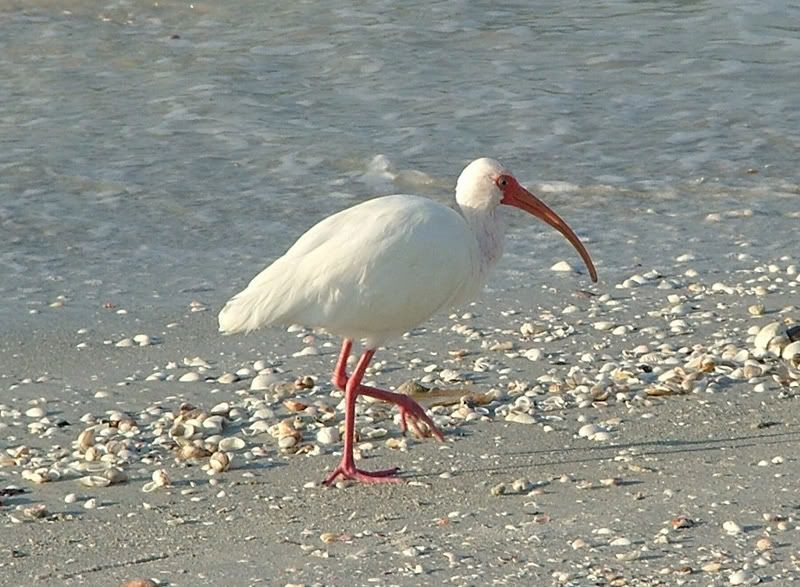
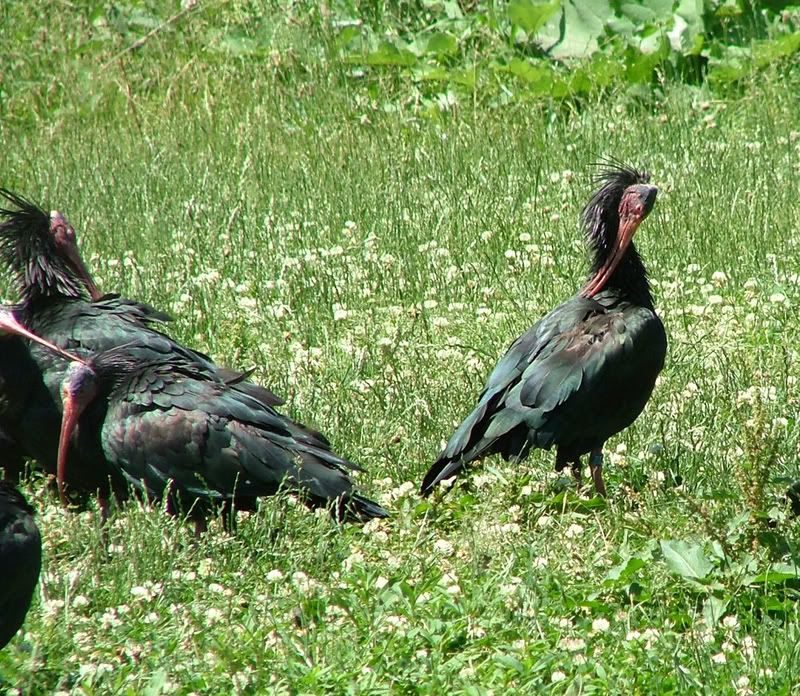
I had hoped that a trip to the Cleveland Zoo this last weekend with Miladyofthelake1 would prove fruitful, and, in fact, it did. Along with the Cinereous Vulture (near threatened—does that count?) and the Lappet-Faced Vulture (vulnerable), I found the Waldrapp Ibis (Geronticus eremita), which I think looks far more sinister than either of those adorably fuzzy carrion-eaters2.

Image from Me
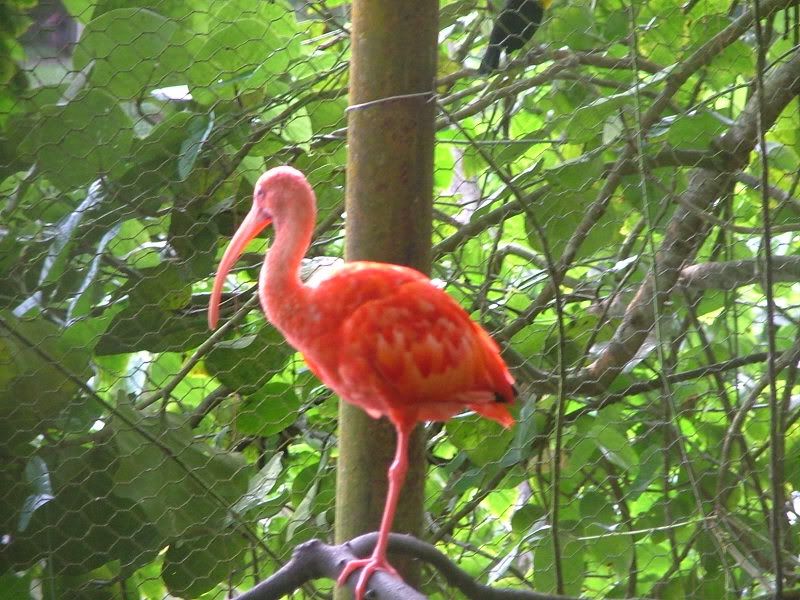
Image by me

Yes, I said ibis, which most of you will associate with the American White Ibis or the Scarlet Ibis, which are much too bright and pretty. The Waldrapp Ibis (or Northern Bald Ibis, or Hermit Ibis) is oil-sheen black with a featherless head and a scraggly mane of black feathers that give it a buzzard look that no respectable shorebird should ever hope for. Not that the Waldrapp Ibis is really a shorebird, aside from being so phylogenetically. It lives in the grassy steppes of Morocco, Syria, and Turkey, as opposed to the marshes that its cousins inhabit. It still exhibits the same eating habits of other ibises by probing the mud (or dirt) for insects and lizards, and when the opportunity arises, small mammals. Completely shunning the aquatic lifestyle, they nest on cliff faces.

So why is it that these poor birds are critically endangered, and confined to three small areas, when it once roamed through all of Northern Africa, Central Europe, and the Middle East? It could be hunting, or nest site disturbances, or habitat loss. The insecticide DDT used in Turkey in the 1950s certainly didn’t help3, but they might be dying out due to natural causes. And these are suggestions from just one source. In other words, people do not know the exact reason why the Waldrapp Ibis is endangered.

Not that that’s stopping them from trying to help them out. Most zoos that house these ibises (and there are more of them in zoos than in the wild) are part of a Species Survival Plan, whose goal it is to breed animals in captivity to be released into the wild. Once there, the Waldrapp Ibis is protected by programs that are growing around them to see that they are undisturbed and happy.

1I have to thank her for editing most of the posts so graciously since, oh, about the lamprey post in late September. If you can read this without asking yourself, “What is he talking about?” thank her.
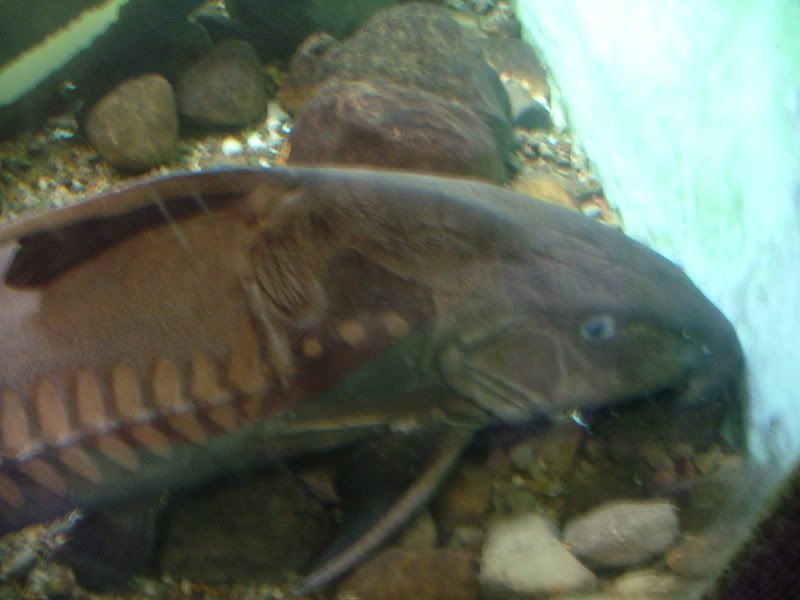
2I also found the Sturgeon Catfish, which is ugly enough to cause me to chastise myself for being disappointed that it’s not endangered. I have to keep reminding myself that I should not wish those sorts of things on an animal just so I can write about it.
3It has a tendency to wander up the food chain and kill whatever’s at top, cf. bald eagles in the United States.

Saturday, March 03, 2007

Stuck on You

(Alternate title: Lice Lice Baby)

Well, Stephanie (who I can’t find a link for) suggested whale lice, but alas, they are not listed. I will get to them, because it’s very possible that they’re endangered. While looking for information on them, I came across an interesting term: coendangered. While this may refer to close-knit predator/prey or flower/pollinator relationships, that’s not the relationship I’m focusing on. The species that I will claim this post is about is the Pygmy Hog-Sucking Louse (Haematopinus oliveri). It is a louse that sucks Pygmy Hogs, not a pygmy louse that sucks hogs1.
Image from Texas A&M
This is just a common hog louse. Can you tell the difference?


These lice, which live normal, lousy lives (hanging on to hair and sucking the blood that springs eternal from the ground) suffer from habitat destruction. What else would you call it when a parasite’s only host is disappearing? The pygmy hog lives in India savannahs, and according to Ultimate Ungulate2 they build/dig a type of nest that “facilitates the transfer of ticks and lice - including one, the pygmy hog louse Haematopinus oliveri, which is found only on this species.” Since the pygmy hogs are dying out due to, well, habitat destruction, so are the lice.

Other animals have this problem as well. All whale species have a specific whale louse3, which must be as endangered as the whales they inhabit, since those whales are their only habitat. None of them are on the IUCN Redlist. The Galapagos hawk has a skin mite that is almost certainly endangered and not listed. Scientists have now used both of these species to get a better idea of their hosts’ evolutionary history. NPR even did a segment (in 2005) about the parasitologists who were discovering the Galapagos hawks’ past.

There are some parasites that we’re too late to save. When California condors were brought into captivity to save them from extinction in the ‘80s, they were, understandably, deloused. Thus passed Colpocephalum californici, the California condor-chewing louse. The article that described this extinction stated that “…charismatic animals hog conservation dollars; the only ethic that makes the condor more important than its louse is its aesthetic value.” This is a good statement of what led me to start this blog, though when a condor beats out something in “aesthetic value”, you know that thing is ugly.

The simple fact that people are now (within the last few years) worrying about parasite conservation is about all I can ask for. Science magazine reported in 2004 that, based on average parasite levels, there are approximately 6,300 coendangered species that don’t appear on any list. I suppose the easiest conservation method is to save their hosts. And watch out for the little guys.

1Because, quite frankly, who’s going to call an almost microscopic animal “pygmy”?
2Should I be surprised this exists?
3Actually crustaceans that cling onto the whale’s face, creating crusty white patches.

Sunday, February 25, 2007

Rudolph the Long-Nosed Antelope

A few weeks ago, Greg1 suggested some animals about which I could possibly write. I thank you profusely for your suggestions, and urge other people to send their ideas. I would never have thought to look at some endangered antelope to see if it was ugly.

Image from CITES
Image from CITES

Yes, this is the Saiga Antelope2 (Saiga tatarica), which I mentioned in the footnote of the last post; it’s the one that looks like that informant from Star Wars3. They are more than just their big nose, but it’s big and ugly enough to make one ask: Why the nose?

It took a bit of searching to find an answer. ARKive states that the gigantic schnoz is used for warming the cold air of the winter, and for keeping the dust out in the dry summers. I don’t just have to take their word for it, since this article (which also has some rockin’-cool skull images) also mentions it (I think):

The enlarged nasal vestibule, lateral vestibular recess, repositioned basal fold, and septal cavernous mass are regarded as a coordinated adaptation to dusty habitats, such that nasal air flow can be dynamically regulated allowing for collection of inspired particulates in the vestibule and thus cleansing of air destined for the lungs.
Moving away from the nose (seriously, stop staring), the Saiga lives in Eastern Europe and Western Asia, wintering in the deserts and summering in the dry steppes, moving up to 70 miles per day during their migration north in April and south in November. Rutting happens at their wintering sites, where males gather up harems of females and fight fiercely for them. I’m sure many of you have heard that most animal fights are ritualistic and don’t end in death—most. The male mortality rate of the Saiga can reach 90%, much of that due to exhaustion. Those who survive start the trek back north to the steppes.

CITES has banned trade of Saiga parts, and hunting is banned in their range, but overgrazing, as domestic ungulates are introduced, is thought to be a major threat to the Saiga. The horns are considered aphrodisiacs, so poaching is rife. Under the Soviet Union, major controls were put in place that boosted its numbers, but since the collapse, poaching has come back into play. Sine only the males have horns, and have their own problems, this leads to a very female-heavy population, who don’t have enough males to inseminate them. The males are already dying from exhaustion; we shouldn’t add sexual exhaustion to the mix.

1See, if you suggest an animal, I'll link to you.
2The name is almost a misnomer. Taxonomists have argued whether these are antelopes or sheep. Current thought says that they’re an intermediate, halfway between the two.
3The first one, IV (not to be confused with the fourth one, I)

Saturday, August 19, 2006

Death in the Fast Lane

I'd like to begin with a profile of the species that started it all, at least for me: Thamnophis radix radix, the eastern plains garter snake.

Now, if anyone is reading this in any state from Indiana to Montana to Kansas, inclusive, and has a knowledge of local snakes, you're probably thinking "Plains garter? Endangered? We've got tons of 'em!" Yes. Yes you do. But if you'll look at the range posted on ODNR's website about them, you'll see a tiny dot in northwestern central Ohio. That is Killdeer Plains Wildlife Area, where I spent much of my high school career.

Visually, the plains garter is nothing too impressive. It gets to be at most 2 feet long, which you can compare to the harmless black rat snake at 6 feet. In terms of coloration, I was hard pressed to tell it from the common eastern garter snake. The difference consists of a row of dots under the lateral stripes on the plains garter. It is even behaviorally unobtrusive, as it manages to be less likely to bite than the common garter snake, which I have picked up dozens of times without getting bitten. Its preferred habitat is, of course, plains and praries, but more specifically, near the ponds and drainage areas to be found in such habitat. Food sources for the plains garter include large insects and small rodents (agricultural pests, if anyone's wondering why we should save these snakes), along with amphibians and earthworms.

A threat facing many endangered species, habitat loss, is what has endangered the plains garter snake in Ohio. We're already at the eastern edge of its range, and the conversion of more and more prairies into developed land, agricultural fields, or even forests, has led to fewer numbers of plains garters.

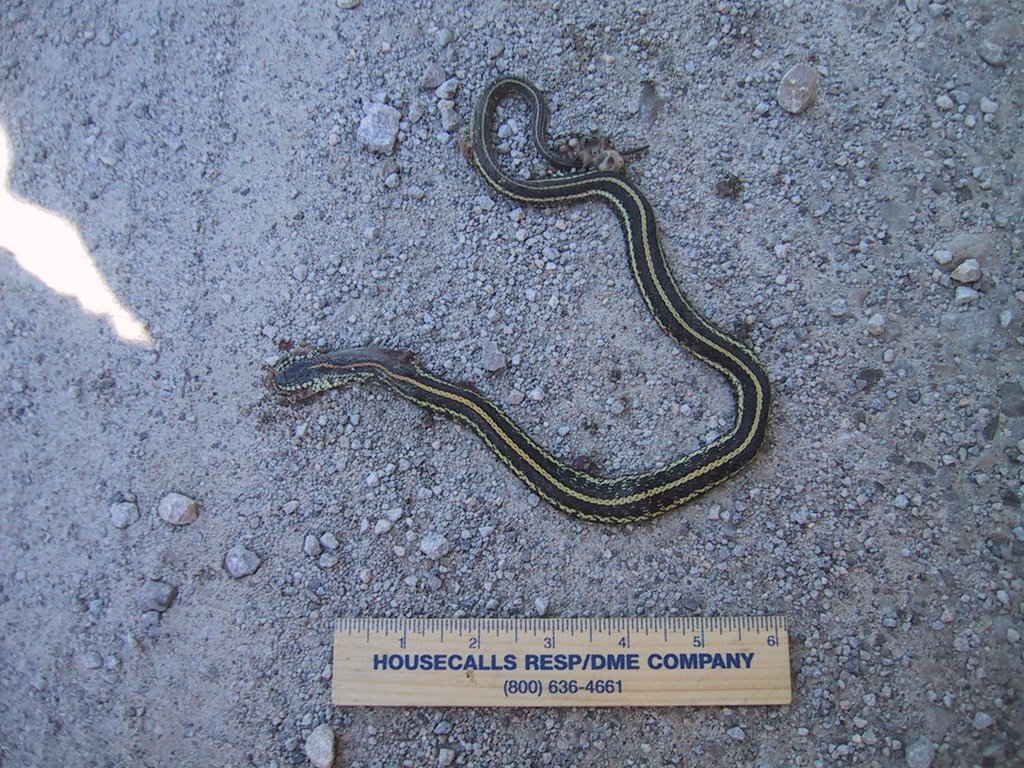
Another issue plaguing these snakes is traffic, which is how I became came to know of the plight of this species. As a freshman in high school, I wanted a science fair project where I could do research on wildlife. I managed to get in touch with the contract herpetologist with ODNR, and he suggested that I perform a road mortality survey at Killdeer Plains Wildlife Area. Consequently, for the next four years, my fall season was spent by peeling dead snakes off the road. A few unfortunate specimens were the plains garter. This is why many of the pictures I have of them look like this:
My own pictures
Image by me
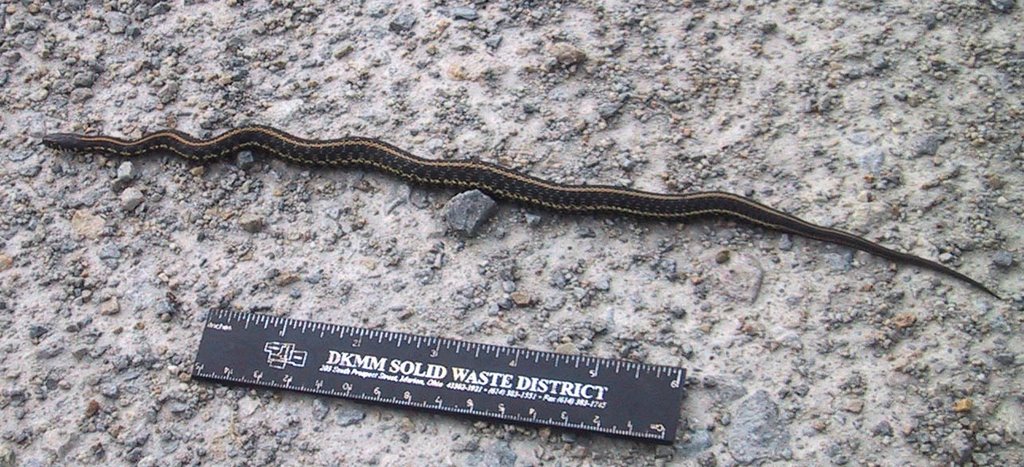
Though there were a few less... "vitally challenged" specimens:
I've got tons of 'em
Image also by me
There is hope. ODNR has enlisted the Columbus and Cleveland Zoos to breed captured plains garters to release their offspring in the wild. This colony has been breeding since 1999, with releases every fall since.

A short note on biodiversity:
I have mentioned that plains garter snakes look a great deal like common garter snakes. They also both live in similar areas. They eat about the same thing (earthworms, small rodents, frogs), but a study in the late '70's showed that there were plenty of those to go around, so there's no competition for food. "Hey," says the contrarian, "why do we need two of these, if they fill the same niche? Why do we need to save the one, if there's another just like it?" Well, they aren't exactly alike. There are habitat differences (the common garter snake is a habitat generalist), along with many genetic differences that don't show up in ecological research. What happens when a disease comes by and takes out a large number of common garter snakes, but the plains garter is immune? You'll be glad it's there, helping keep the rodent and insect population in check.